
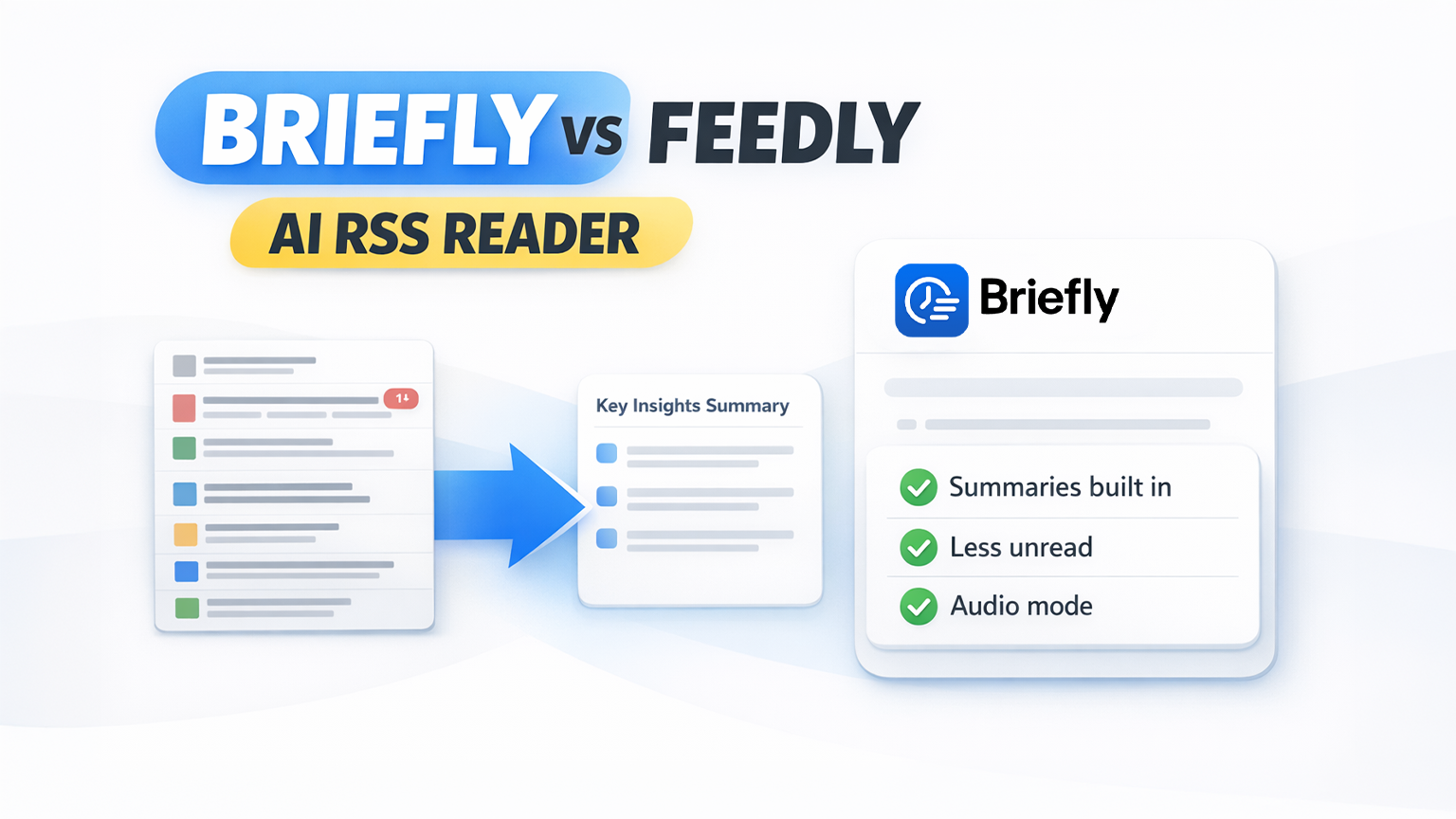
For over a decade, Feedly has been the standard bearer for RSS readers, allowing users to aggregate their favorite blogs and news sites into one clean interface. However, as the volume of web content has exploded, simply aggregating links is no longer enough. The modern internet user needs a tool that doesn’t just collect articles, but actively helps consume them. This evolution has sparked the debate: Should you stick with a traditional aggregator like Feedly, or upgrade to an AI-powered digest like Briefly?
Feedly excels at pure aggregation. Once you add an RSS feed, it will meticulously show you every single post published by that site. But what happens when you follow 50 sites? You are suddenly met with a “100+ Unread” badge that induces anxiety rather than excitement. Feedly hands you the firehose without providing a way to drink from it.
Briefly, on the other hand, is built on the philosophy of summarization. When you add a feed to Briefly, it doesn’t just show you the headline and a snippet; it uses advanced AI to read the entire article and provide you with a structured, 2-minute summary of the core facts.
If your goal is to stay informed without spending hours reading, Briefly outperforms traditional RSS readers on three key fronts:
If you want to read every single word written by your favorite authors, Feedly remains a solid tool. But if you are a busy professional, executive, or student looking to maximize knowledge intake while minimizing time spent, Briefly is the clear winner. Upgrade from aggregation to summarization with Briefly today.
