
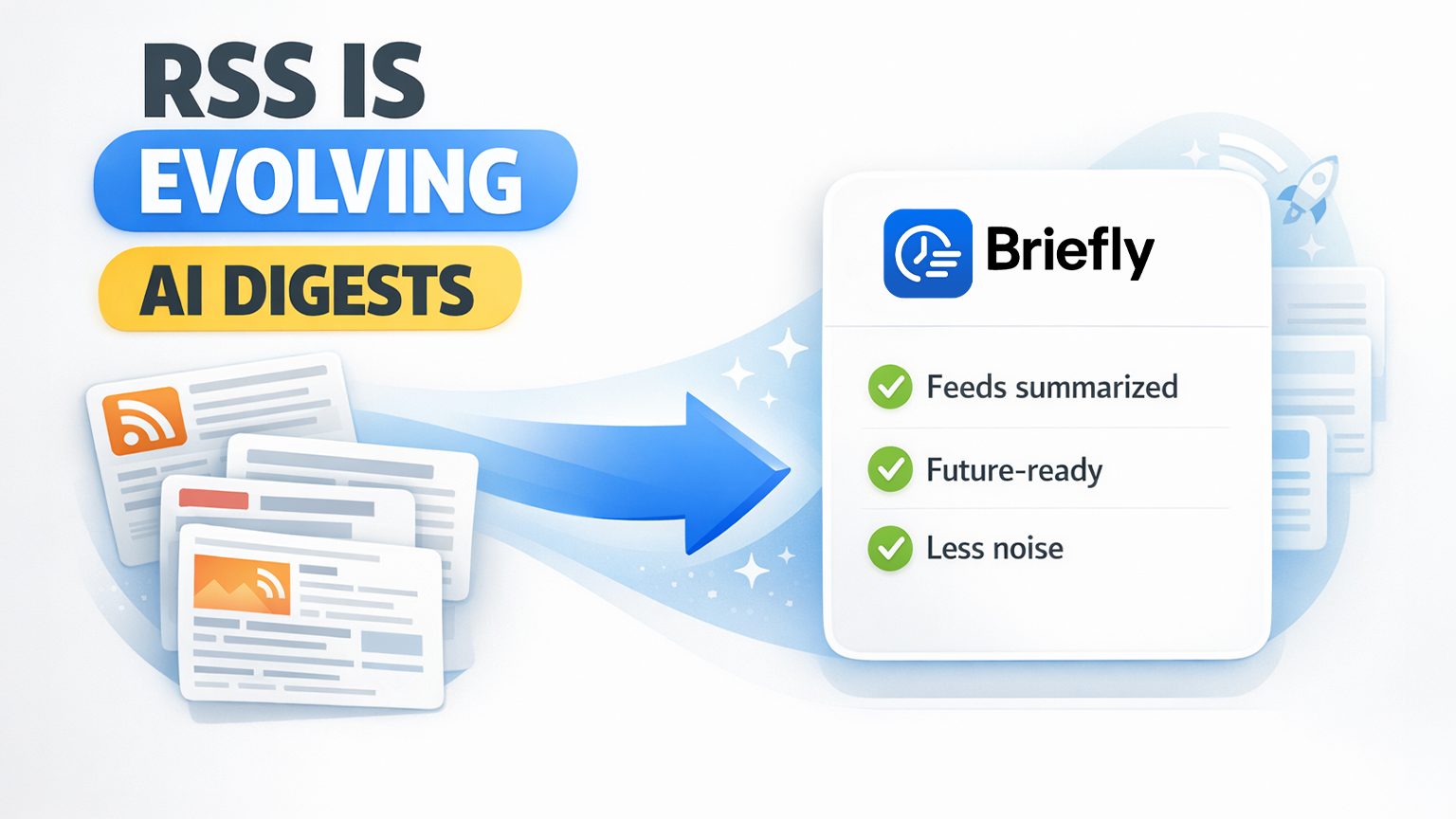
For the internet power user, RSS was the holy grail of information management. It promised a chronological, algorithm-free feed from your most trusted sources. But the question is spreading across tech forums and productivity circles: Are traditional RSS readers dead? The straightforward answer is no, the protocol itself is alive and well. However, the way we interact with those feeds is undergoing a massive paradigm shift, driven entirely by Artificial Intelligence.
The problem with traditional RSS readers (like Feedly or Inoreader) is that they assume the user has unlimited time to read. They aggregate perfectly but offer no assistance with consumption. If you subscribe to 50 active blogs, you are presented with a firehose of raw text daily. It leads inevitably to feed-bankruptcy—the point where you simply click “Mark All as Read” and walk away.
Because humans cannot possibly keep up with the output of the modern internet, the future of RSS relies on an intelligent middle layer. Programs must read the feeds on our behalf and report back with only the most vital information. This is exactly where Briefly steps in.
The solution isn’t to abandon your carefully curated sources in favor of social media algorithms. The solution is to upgrade your processing tool. Transition from pure aggregation to intelligent summarization. AI digests are the undeniable future of learning—experience it today with Briefly.
